
Conservation of Oxide coated Metals by David Hallam is licensed under a Creative Commons Attribution-NonCommercial-ShareAlike 4.0 International License.


From Wikipedia, the free encyclopedia
Release early, release often (also: time-based releases, sometimes abbreviated RERO) is a software development philosophy that emphasizes the importance of early and frequent releases in creating a tight feedback loop between developers and testers or users, contrary to a feature-based release strategy. Advocates argue that this allows the software development to progress faster, enables the user to help define what the software will become, better conforms to the users' requirements for the software,[1] and ultimately results in higher quality software.[2] The development philosophy attempts to eliminate the risk of creating software that no one will use.[3]This philosophy was popularized by Eric S. Raymond in his 1997 essay The Cathedral and the Bazaar, where Raymond stated "Release early. Release often. And listen to your customers".[4]This philosophy was originally applied to the development of the Linux kernel and other open-source software, but has also been applied to closed source, commercial software development.
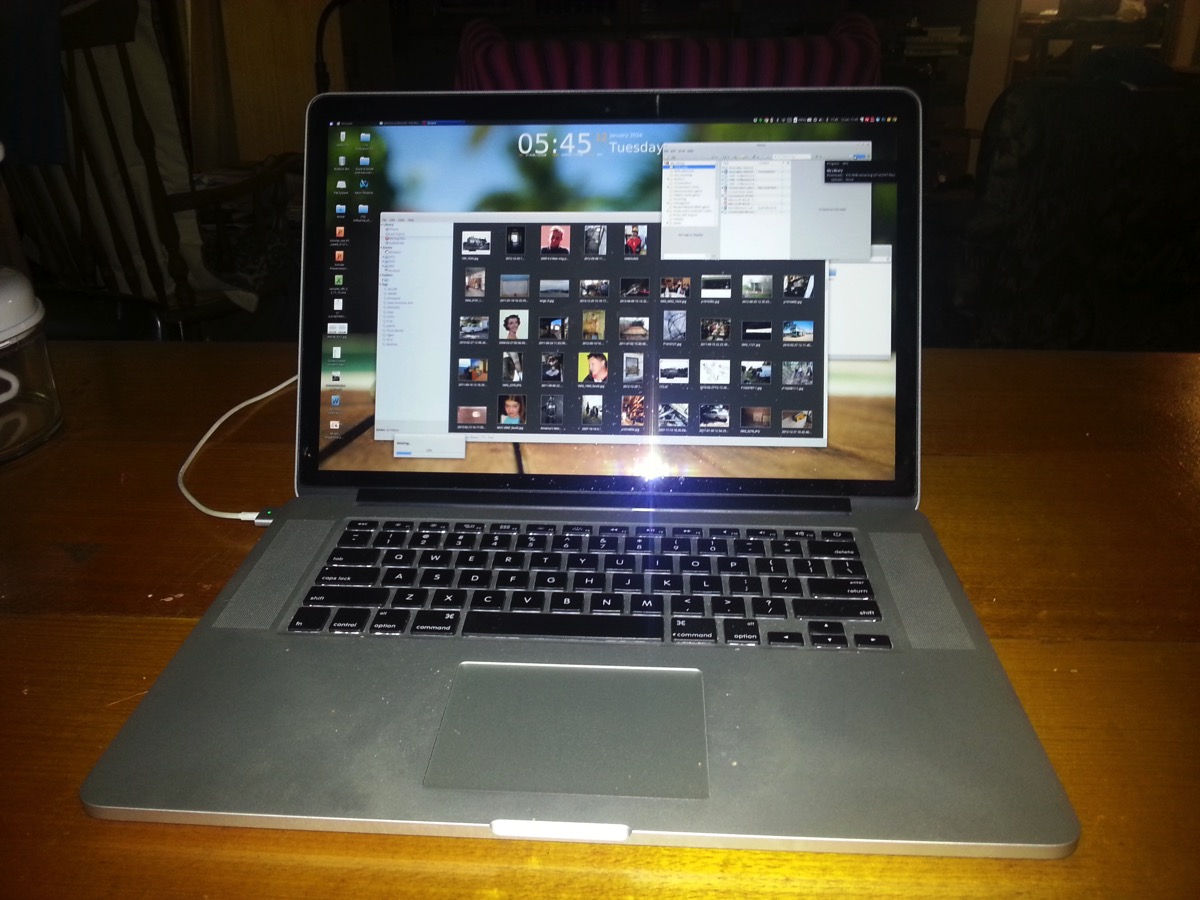


This week is wrap-up week.
I think I’ve achieve most of what I want. Working as a scholar at the Getty has been an amazing experience. I would recommend anyone with a serious conservation project that can be done succinctly within the timeframes should apply for a GCI scholar term.
When you arrive at the Getty you are told that the three months will disappear very fast, they did. As ever you start your project with certain parameters and ideas about what you’re going to get out of, your project then evolves as you gather information and results. Mine went through several stages stages of expanding and contracting. I now have some half decent timelines for metal finishing processes are massive database of PDF files which will be turned into a substantial bibliography and history and technology article. I also have a wide-ranging selection of conservation papers for the conservation review article. I’ve played with various forms of digital scholarship and have started to refine my processes even further.
On the Mac I’m using Zotero, Evernote, Scrivener, and Dragon. Most of this is transferable to linux. I’m pretty sure Dragon will work in wine.
Over the next few months I will post timelines, parts of chapters, bibliographies, and draft articles to this website. I will be asking for your candid non-critical feedback. I will be trying very hard to adopt the open source principle of release early and release often so initially I don’t care if there are problems with a page or information I don’t have I will put that in the post hoping that other people can help.
I’m looking for people who can help me decipher some of the German, Chinese, Japanese and East European articles I have. These articles I think outline the development of metal finishing in their home countries so it would be good to add these to a timeline. Currently my timelines are worldwide but I would like to make some of them regional.
I’ll be sad to leave here on Friday but I’ll be going on a road trip up to Seattle with my daughter to see some of the US. That should be great fun.
One of the things I’m trying to do whilst I’m here at the Getty is to improve my digital workflow. I stopped worrying quite as much about what software I use and what operating system I use and I’m tending to concentrate more on the output.
I’m trying to ensure that my workflow can be used on any platform, Mac OS, LINUX, Windows. My basic workflow can be divided as follows;
Mind mapping.
I use mind mapping to plot out what I think I’m going to write, and then to plot out each section. My choice of mind mapping software is really only limited by the requirement that it can output as opml. I find that my first mind maps are really exploring my thoughts as they currently stand are and they change quite drastically over the course of my project. As an aside comment I also use mind maps for doing such things as stream proposals short reports Project planning in fact many things. It is essential that the mind mapping software also has a facility for adding notes to each of the nodes in the mind map the note field is equivalent to a paragraph in a written work. My current software of choice on a Mac’s thoughts, and on Windows or Lenox its simpleminded. I find that I thoughts is nice and clean and has all of the export functionality that I need. It pains me that it is a Mac only product and is definitely not open source. Simple mind by contrast is not really very clean and particularly if you hook it into dropbox you can find that your files are all over the place and you’re unsure of which version is which it also is not open source. Open source products such as freemind, plane mind or Docear are also available.
At the end of this process I will have a very draughty outline of how I feel the paper is going to be written.
Bibliographic
I try to do the majority of my bibliographic work online. Gone are the days when one could wander into a library and just find some books in the catalogue and then browse the shelves. Wherever possible I try to download the bibliographic data from wherever I have done the searches. On this current project I am finding the Getty’s online primo search to be invaluable. It allows me to look at what the Getty has in its collection first. Download the bibliographic data. And then spread the search wider.
For scientific papers I also use scope this and Google scholar. Please also don’t forget to use Google or being because both of these will capture when an academic has posted their papers to their own webpage. This can avoid the hassle of having to find something that is behind a pay wall. I tend to give open access periodical is a preference.
When I am searching the web I tend to capture my search results into Evernote and have a folder for each project the great thing about Evernote is that you can use it’s quite substantial search characteristics. The other wonderful thing about Evernote is that it will be accessible from any device that is network connected. Devon think is a product many people on Macs use but I find it too limited as it only works on one device and operating system.
Bibliographic software is quite crucial. I find that Zotero is best. Yes it doesn’t have a sexy interface but you can use it for collecting both bibliographic data from papers and also cataloguing appropriate blogs and academic websites. For capturing websites you need to use as tarot within Firefox. When I’m not capturing websites I tend to use is Zotero stand-alone.
Note taking
If I’m not very careful I tend to end up with notes scattered all over the place, notebooks, digital notepads, scraps of paper and wood documents. What I have managed to do with this project is limit my note taking to Zotero, and within PDFs filed in Zotero. I use is Zotfile to extract annotations, and store them in Zotero. I feel find that when I am reading a book or a large paper that it is useful to use speech recognition to record my comments in a text file. That text file can then be pasted into is Zotero as a note.
Obviously as I go through lit reading the literature and taking notes I will be having some brainstorms. Depending on where I am I will record these in Google Doc, or Google notes. From there they can easily be copied to’s Zotero or they can be used to modify my mind maps.
Writing.
I use scriveners as my writing program of choice. All of my notes will be copied into the research section of my Scriven file. The outline of the mind map will be exported as OPM L and will provide the basic structure for my ritual written document. My notes bibliographic data and other thoughts can now be used to assist with my writing.
Again use voice recognition rather than typing for a majority of my written work. Currently I use Dragon product for my voice recognition. I must admit I get very frustrated with its constant demands to be updated and its constant inability to run on the present version of Mac OS without being updated. For some reason the cost of the updates always seems to be about the same as the cost of a brand-new version. Dragon would have to be one of the least open and most frustrating organisations to deal with as soon as there is a viable option I will use it.The main problem with using voice recognition software is that people think you’re rather mad sitting in a room talking to yourself. It can also be quite distracting for fellow workers in an open office space.
Editing.
Once I have finished my writing I normally check the document over in Scribner making sure that all of the sections are falling as I want them, stations are inserted and that they flow in the way I want them. I then compile the document. This time I’m going to try and use the RTF function of is it Aero to identify my citations and insert them after compilation. We will see how this goes. I expect to do the final checking and editing in libra office having used scriveners compilation to libra office.
I will also use the compilation function to export drafts of sections which can then be posted to this website for external comment. Again and experiment.
Let’s see how these last two sections go.
Amazing….
How often in your professional career have you been told .. “Be selfish” this time is your time to do research! Well I’ve now been here at the Getty as a Scholar at GCI for 6 weeks out of my 3 month stint. I have heard this mantra for some time now.. Today from the head of GCI and yes they’ll mean it.. Because if you are here e for 3 month you can get amazing things done - but - you do need to be selfish. 3 months is not long but.. it is long enough and can spread the projects further.
I mean how often can you ignore emails and just bury your head in a supurb real and virtual library ignoring all else? How often can you ask staff if you can talk about analysis possibilities and get a . "Yes once I return from *** ". we will talk as that sounds interesting. This place is - buzzing with activity. And ideas.
Then that night its a scholar “potluck” dinner so you have to provide something. Preferably edible. Eventually you end up in a heated discussion on the pros and cons of open source access to data with a bunch of art historians. Magic.
We did not agree but did debate -
The opportunity to actually ignore the world for 3 months and focus on “one” project is magic. The Getty program is amazing as it on brings together artists, art history scholars and conservators under one roof of the scholar housing. Interchange is going to happen. no matter.
As a modern metals conservator who specialises in technology objects I feel very privileged to be here - I am not from the art world - but I do not feel out of place. The digital scholarship push unites us in ways we could never have seen a decade ago. It’s magic.
This makes the potluck dinners magic and eventful as we debate the end of academic process as we know it …. currently
Thank you Getty.
I will update progress on this page.
The project came out of a desire to update the 1993 article by Adams and Hallam and the obvious need that was seen during the Aluminum Conference in April 2014 for a guide to the identification of coatings on modern metals.
Hence the project aims to;
Produce a review article on the conservation of oxide coatings on Modern Metals
Construct an article on the history and technology of oxide coatings on modern metals aimed at the objects conservation community.
Produce a identification flow chart which could be developed into an online decision aid.
Review relevant literature.
Survey the needs of the conservation community the online surveys.
Gather published, unpublished and historical information into a bibliographic database
Write review articles (Getty)
Publish review articles
Look for information in parallel field such as military and forensic sciences.
Develop and test decision tree both in workshops and online. (Getty)
Publish decision tree in an online form
The awareness of oxide coatings importance to the aesthetic and function of modern metals in the conservation and curatorial fields is still minimal. Traditional techniques are still used to conserve steel, zinc and aluminium.
The ability to understand, recognize and conserve such coating will be useful in the following fields;
art conservation
technology conservation
architecture
historic objects


